Michigan Panfish Species Guide
There's nothing quite like a day out on a Michigan lake or river, casting a line and feeling that familiar tug, only to pull in a beautiful, feisty panfish. Yet, sometimes, it can be a bit of a mystery distinguishing between a chunky bluegill and a vibrant pumpkinseed, or knowing the subtle differences between a black crappie and its white cousin. This guide is here to demystify Michigan's abundant panfish species, helping you identify your catch and understand where and how to find these beloved fish that offer so much joy to anglers of all ages.
What Exactly Are Panfish, Anyway?
When we talk about "panfish" in Michigan, we're not just referring to any small fish you might catch. It's a specific group of species, primarily from the sunfish family, that are highly sought after not only for their sporting fun but also for their delicious table fare. They're called panfish because, well, they fit perfectly into a frying pan! They're usually not trophy-sized giants, but they make up for it in numbers and accessibility, providing fantastic fishing opportunities for everyone from seasoned veterans to excited youngsters.
Defining Panfish: More Than Just Size
The term "panfish" generally encompasses smaller, edible freshwater fish, typically less than 10-12 inches, that are abundant and relatively easy to catch. In Michigan, this usually means species like bluegill, various types of crappie, yellow perch, and a handful of other sunfish. What truly defines them isn't just their size, but their aggressive feeding habits and their schooling behavior, which often means when you find one, you're likely to find many more. They are foundational to Michigan's freshwater ecosystems and a cornerstone of our angling culture. They thrive in a wide variety of habitats, from shallow, weedy inland lakes to deeper, clearer waters and even some river systems.
Why Anglers Love Panfish
Anglers adore panfish for a multitude of reasons, making them a fantastic target year-round. For starters, they're often the first fish that new anglers, especially kids, catch, sparking a lifelong love for the sport. Their willingness to bite makes them incredibly accessible; you don't need fancy, expensive gear to have a successful day of panfish fishing. A simple cane pole, a bobber, and some worms or crickets can lead to a cooler full of fish. Beyond the easy catch, panfish are renowned for their flaky, white meat, making for incredible meals. Whether fried, baked, or grilled, they're a true freshwater delicacy. Plus, they provide an excellent opportunity to hone your fishing skills, experiment with different baits and lures, and simply enjoy the tranquility of Michigan's beautiful waters.
Bluegill: The Michigan Staple
Ah, the humble bluegill! If there's one fish that epitomizes Michigan panfishing, it's probably the bluegill. Almost every angler in Michigan, regardless of their experience level, has fond memories of catching these feisty little sunfish. They're abundant, widespread, and a blast to catch, providing endless entertainment and some of the best eating around.
Identifying Michigan Bluegill
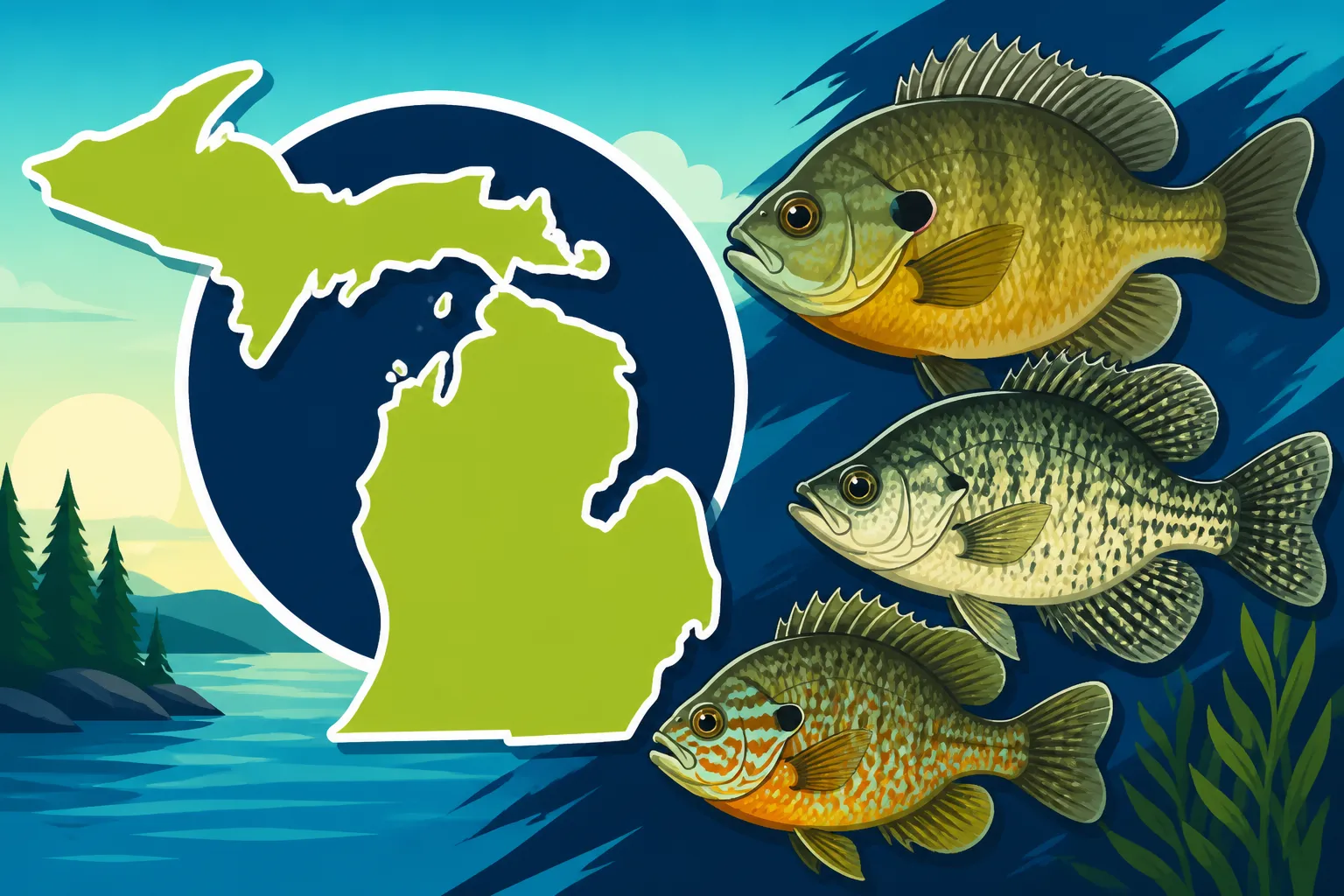
Bluegill are quite distinctive, once you know what to look for. Their bodies are typically deep and compressed, almost disc-shaped, with a small mouth. Coloration can vary quite a bit depending on the water they live in, but they usually have an olive-green back that fades into a yellowish belly, often with several dark, vertical bars or spots along their sides. The most tell-tale sign, and where they get their name, is the prominent dark blue-black "ear flap" on the gill cover, which often has a bit of an orange or red spot on the bottom edge, especially in males during spawning season. Their pectoral fins are long and pointed. A common mistake is confusing them with pumpkinseeds, but bluegill generally lack the bright orange or red spots on their bodies that pumpkinseeds often display.
Where to Find and How to Catch Bluegill
Bluegill are found in virtually every inland lake and pond across Michigan, and even in some slower-moving rivers. They absolutely love structure and vegetation. Think about weed beds, lily pads, submerged logs, docks, and brush piles – these are prime bluegill real estate. They tend to school up, so once you find one, you're usually in for a treat.
For catching them, simplicity is key! Small hooks (size 8 or 10 is perfect), a small bobber, and lightweight line (4-6 lb test) are all you really need. The classic bluegill bait is a piece of nightcrawler, a red worm, crickets, or even corn. Small artificial lures like tiny jigs (1/32 or 1/64 ounce) tipped with a small plastic grub or a wax worm can also be incredibly effective. Fly fishing with small poppers or wet flies is another fantastic way to target them, especially in the evenings. They bite well throughout spring, summer, and fall, and are even a popular target for ice fishing. If you're looking for gear, a quick search on Amazon for "bluegill fishing tackle" will show you just how many options are available, from beginner kits to more specialized ultralight setups.
Crappie: The Delicious Duo Black and White
Crappie, often pronounced "croppie" by many Michigan anglers, are another highly prized panfish. These sleek, silvery fish are renowned for their incredible flavor and can grow to respectable sizes, making them a favorite target for anglers looking for a good fight and an even better meal. Michigan is home to two primary species: black crappie and white crappie, and while they share many similarities, knowing their differences can sometimes help you tailor your approach.
Black Crappie vs. White Crappie Identification
Distinguishing between black and white crappie can be tricky, but there are a few key characteristics to look for.
Black Crappie ( Pomoxis nigromaculatus )
- Coloration: Generally darker, with irregular black blotches scattered across their silvery-green bodies, almost like camouflage.
- Dorsal Fin Spines: The most reliable identifier. Black crappie typically have 7 or 8 dorsal fin spines.
- Body Shape: Tend to have a more rounded, compact body shape.
- Mouth: A larger mouth that extends back beneath the eye.
- Habitat Preference: Often prefer clearer, cooler water with abundant vegetation and structure.
White Crappie ( Pomoxis annularis )
- Coloration: Lighter, more silvery bodies with distinct vertical bars or stripes along their sides, especially noticeable on larger fish.
- Dorsal Fin Spines: Usually have 5 or 6 dorsal fin spines.
- Body Shape: Tend to be more elongated and oval-shaped.
- Mouth: A slightly smaller mouth compared to the black crappie.
- Habitat Preference: More tolerant of turbid (murky) water and often found in larger, slower-moving rivers and impoundments.
While these are the general rules, remember that hybrid crappie can exist, and environmental factors can influence coloration, making identification a fun challenge sometimes!
Best Spots and Techniques for Crappie Fishing
Crappie, both black and white, are schooling fish, so when you find one, you've often found the school. They prefer areas with submerged timber, brush piles, docks, bridge pilings, and weed lines – anything that provides cover. In spring, they move into shallow areas to spawn, making them easier to target. As temperatures rise, they often retreat to deeper water, suspended over structure or in submerged cover.
Techniques for Crappie:
- Jigging: Small jigs (1/16 to 1/8 ounce) tipped with tiny plastic tubes, grubs, or minnows are incredibly effective. You can cast these out and slowly retrieve them, or vertical jig them around structure.
- Bobber Fishing: A small bobber set to suspend your bait or jig at the desired depth is a classic and highly effective method. This is great for fishing around docks or brush piles. Live minnows are a favorite crappie bait, dangled under a bobber.
- Trolling: In larger lakes, slow trolling with small crankbaits or jigs can be effective for locating schools of crappie, especially when they are suspended.
- Ice Fishing: Crappie are a popular ice fishing target. Jigging small ice jigs tipped with a wax worm or a specialized crappie minnow is a deadly technique.
Remember to check the Michigan Fishing Regulations Every Angler Should Know for specific limits and rules for crappie in your chosen body of water.
Yellow Perch: The Great Lakes Delicacy
The yellow perch is arguably one of Michigan's most iconic and beloved panfish, especially for those who appreciate fine table fare. Often found in large schools, particularly in the Great Lakes and larger inland lakes, yellow perch offer consistent action and some of the best eating in freshwater. There's a reason they're a staple on menus across the state!
Spotting Yellow Perch in Michigan Waters
Yellow perch are quite easy to identify with their distinctive markings. They have a slender, somewhat elongated body with a striking golden-yellow to brassy-green coloration on their sides, fading to a lighter belly. The most prominent feature is the series of 6 to 8 dark, vertical bars or stripes that run from their back down their sides. Their fins are often tinged with orange or red, especially the lower fins, which adds to their vibrant appearance. They have two dorsal fins, the first being spiny and the second soft-rayed. Their mouth is relatively small. Unlike bluegill or crappie, their body shape is less disc-like and more torpedo-shaped.
Perch Hotspots and Successful Methods
Yellow perch are incredibly widespread throughout Michigan. While they are abundant in many inland lakes, they are particularly famous for their presence in the Great Lakes and their connecting waters, such as Lake St. Clair and the Detroit River. Areas like Saginaw Bay on Lake Huron are legendary for their perch fishing. Michigan Yellow Perch Limit on Lake St. Clair is a topic many anglers watch closely due to the popularity of these fish in that system.
Where to Find Them:
- Great Lakes & Large Inland Lakes: Look for them over sand flats, along weed lines, near drop-offs, and around submerged structure like reefs and rock piles. They often school up in large numbers, sometimes in surprisingly deep water.
- Inland Lakes: Similar to the larger bodies of water, perch will relate to structure, vegetation, and sudden changes in depth. They are often found in areas with both shallow and deeper water access.
Techniques for Catching Perch:
- Still Fishing: This is probably the most common and effective method. Use a small hook (size 6-10), a split shot, and a bobber. Live bait is king for perch – small minnows, pieces of nightcrawler, wigglers (mayfly larvae), or wax worms are all excellent choices.
- Jigging: Small jigs (1/32 to 1/8 ounce) tipped with a piece of bait or a small plastic grub can be deadly, especially when fishing deeper water or through the ice. A rapid jigging motion followed by a pause often triggers bites.
- Ice Fishing: Perch are a premier ice fishing target. Anglers use small jigs, often called "spoon jigs" or "tear drops," tipped with a wax worm or minnow. They are typically found near the bottom or suspended just above it.
- Reading the Water: A good fish finder can be invaluable for locating perch schools, especially in larger bodies of water. You can often see them as distinct "clouds" on your sonar screen.
Keep in mind that perch populations can fluctuate, and local conditions always play a role. Always refer to the current Michigan Fishing Regulations Every Angler Should Know to stay informed on bag and size limits, as these can vary by water body.
Other Michigan Panfish Worth Knowing
While bluegill, crappie, and yellow perch often steal the spotlight, Michigan's waters are home to several other fantastic panfish species that offer unique angling experiences. These species might not always be targeted specifically, but they are common catches and certainly contribute to the rich tapestry of Michigan's panfish opportunities. Knowing how to identify them adds to your overall angling knowledge and appreciation for our diverse fisheries.
Rock Bass and Green Sunfish
Let's dive into a couple of other hardy panfish you're likely to encounter:
Rock Bass (Ambloplites rupestris)
Often called "redeye" by anglers, the rock bass is a robust little fish that lives up to its name.
- Identification: Rock bass have a somewhat chunky, oval-shaped body, typically bronze to olive-brown on the back, fading to lighter sides and belly. Their most distinctive feature is their large, often bright red eyes. They have relatively large mouths and 5-7 spines in their anal fin. Look for a pattern of dark spots, sometimes arranged in rows, along their sides.
- Habitat: As their name suggests, rock bass love rocky areas. You'll find them around rip-rap, rocky shoals, boulder fields, and bridge pilings in lakes and clear, cool rivers and streams. They prefer clear water.
- Fishing: Like other panfish, rock bass are not picky eaters. Small spinners, jigs, worms, and minnows are all effective. They put up a surprisingly strong fight for their size, making them a fun catch, especially on ultralight tackle. They're often caught as a bonus when targeting other species.
Green Sunfish (Lepomis cyanellus)
The green sunfish is another common, yet often overlooked, panfish in Michigan. They are incredibly hardy and adaptable, thriving in a wide range of habitats.
- Identification: Green sunfish have a more elongated, stout body compared to the disc-shaped bluegill or pumpkinseed. Their coloration is usually dark olive-green on the back, fading to yellowish-green on the sides, often with iridescent blue-green spots and streaks, especially on the head. They have a large mouth that extends past the front of the eye, and a prominent black ear flap often rimmed with a pale orange or yellow margin. They also have dark vertical bars, but they are less distinct than on a bluegill.
- Habitat: These tough little fish can be found in a vast array of Michigan waters, from small ponds and ditches to larger lakes and slow-moving rivers. They tolerate turbid water and prefer weedy areas, submerged timber, and brush. They're often found in places where other sunfish might struggle.
- Fishing: Green sunfish are aggressive biters and will attack almost anything. Worms, crickets, small jigs, and tiny spinners are all effective. They're a great target for beginners and provide constant action.
Pumpkinseed and Warmouth
Two more members of the sunfish family frequently caught in Michigan:
Pumpkinseed (Lepomis gibbosus)
The pumpkinseed is perhaps the most colorful of Michigan's panfish, a true gem of our inland waters.
- Identification: Pumpkinseeds are truly beautiful fish. They have a deep, compressed body, similar to a bluegill, but their coloration is much more vibrant. Their sides are typically olive-gold with numerous bright orange, red, or iridescent blue spots and flecks. The most distinguishing feature is the bright red or orange spot on the rear edge of their black ear flap, often bordered by iridescent blue lines that extend from the eye across the gill plate. Their pectoral fins are long and pointed.
- Habitat: Pumpkinseeds prefer clear, shallow, weedy areas of lakes and slow-moving rivers. They are often found amongst lily pads, submerged vegetation, and near docks, much like bluegill.
- Fishing: They have very small mouths, so tiny hooks (size 10-12) are best. Worms, crickets, small insects, and tiny artificial flies or jigs will tempt them. They're enthusiastic biters and a delight to catch due to their stunning appearance. They're also often caught when targeting bluegill.
Warmouth (Lepomis gulosus)
While less common than the other sunfish, the warmouth is still a native Michigan panfish that can surprise anglers, especially in the southern parts of the state.
- Identification: Warmouth have a stouter, more bass-like body than other sunfish, and their coloration can be quite mottled, varying from olive-brown to dark brown with irregular darker blotches or vertical bars. Their most noticeable features are their relatively large mouth (larger than most other sunfish, extending to or past the middle of the eye) and three or four dark streaks radiating backward from the eye, often described as a "teardrop" pattern. Their eyes are usually reddish. They typically have 3 anal fin spines (compared to 5-7 for rock bass).
- Habitat: Warmouth prefer slow-moving, heavily vegetated waters, including ponds, shallow lakes, and sluggish streams, especially those with muddy or soft bottoms. They thrive in murky water and dense cover like lily pads, stumps, and fallen trees.
- Fishing: Like their sunfish cousins, warmouth are aggressive. Worms, small minnows, crickets, and small artificial lures like jigs and spinners are effective. They're hardy fighters and a fun surprise catch.
Knowing these additional panfish means you'll be able to identify more of your catches and understand the diverse ecosystems thriving beneath Michigan's waters.
Essential Tips for Panfish Anglers in Michigan
Michigan's panfish truly offer something for every angler, from the seasoned pro looking for a consistent bite to the family simply enjoying a day on the water. To make your panfish adventures as successful and enjoyable as possible, there are a few key considerations, especially when it comes to gear and, crucially, understanding the regulations.
Gear Up Right for Panfish Success
One of the beautiful things about panfish fishing is that you don't need to break the bank for expensive equipment. Simple, effective gear is often all it takes, but having the right simple gear can make a big difference.
- Rods and Reels: An ultralight or light action spinning rod, typically 5 to 6.5 feet long, paired with a small spinning reel (like a 1000 or 2000 size) is ideal. This setup allows you to cast light lures and baits easily and really feel the fight of even a small bluegill. For beginners or kids, a simple spincast combo is perfect, easy to use, and incredibly durable. If you're a fly fishing enthusiast, a 2 or 3-weight fly rod is absolute magic for panfish, delivering delicate presentations.
- Line: Light monofilament or fluorocarbon line, in the 2-6 lb test range, is perfect. It's nearly invisible to finicky panfish and allows for maximum sensitivity. Braided line can also be used, but you might want a fluorocarbon leader for stealth.
- Hooks: Small hooks are paramount. Sizes 8, 10, or even 12 are generally best for panfish, especially for bluegill and pumpkinseed with their smaller mouths. For crappie and perch, a size 6 or 8 might be better if you're using minnows.
- Bobbers: A small, sensitive bobber is crucial. Spring bobbers, slip bobbers, or even small fixed bobbers will show you the slightest nibble. Avoid those giant red-and-white plastic bobbers unless you're fishing for very aggressive fish or with very heavy bait.
- Sinkers/Split Shots: A few small split shots crimped a foot or so above your hook will help your bait sink and keep it in the strike zone.
- Bait: Live bait is often king for panfish. Worms (nightcrawlers, red worms), crickets, wax worms, spikes, and small minnows are all highly effective. For artificials, tiny jigs (1/32 to 1/64 oz) in various colors (chartreuse, white, pink, black) tipped with small plastic bodies or Gulp! baits can be incredibly productive. Small spinners and spoons also work wonders. You can find a wide variety of these baits and lures on Amazon, making it easy to stock up before your next trip.
- Net: A small, soft-mesh landing net can be handy for landing larger crappie or perch, especially if you're fishing from a pier or boat.
- Pliers: Small needle-nose pliers are excellent for removing hooks safely and quickly, especially when practicing catch and release.
Reading the Regulations: Limits and Seasons
Understanding Michigan's fishing regulations is not just about avoiding fines; it's about being a responsible angler and contributing to the health and sustainability of our fisheries. Regulations can and do change, and they often vary by water body, especially for panfish.
- Statewide Regulations: Michigan has general statewide regulations for many panfish species, including daily possession limits. For instance, the general rule for sunfish (which includes bluegill and pumpkinseed) and yellow perch often has a generous combined daily possession limit, but it's crucial to confirm this.
- Lake-Specific Regulations: This is where it gets particularly important for panfish. Many popular lakes in Michigan, especially those with heavy fishing pressure or unique biological factors, will have special regulations that supersede the statewide rules. This could mean different daily limits, minimum size limits, or even seasonal closures for certain species. For example, Michigan Walleye Size and Possession Limits and Michigan Yellow Perch Limit on Lake St. Clair are frequently updated for specific areas.
- How to Stay Informed:
- Michigan DNR Website: The official Michigan Department of Natural Resources (DNR) website is your go-to resource for the most current regulations. They publish a yearly fishing guide that you can download as a PDF or view online.
- DNR Hunt Fish App: The Michigan DNR Hunt Fish App is an incredibly convenient tool. You can purchase licenses, look up regulations by specific water body, and even report harvests for certain species right from your phone.
- Local Bait Shops: These are goldmines of information. Local bait shop owners and staff are often on the water themselves and can provide up-to-the-minute details on what's biting, where, and any local nuances in the regulations.
Remember that a fishing license is required for anyone 17 years of age or older to fish in Michigan waters. Make sure you have yours before you head out! How to Buy a Michigan Fishing License has all the details you need. Staying informed ensures that you're not only having a great time but also helping to preserve Michigan's incredible panfish resources for future generations.
Here's a quick reference table for some of Michigan's common panfish species:
| Species | Key Identification | Typical Size (inches) | Common Habitat | Preferred Bait/Lure |
|---|---|---|---|---|
| Bluegill | Dark blue/black "ear flap" with orange spot; disc-shaped body; vertical bars. | 6-10 | Weedy lakes, docks, submerged structure. | Worms, crickets, wax worms, small jigs, tiny poppers. |
| Black Crappie | Irregular black blotches; 7-8 dorsal spines; rounded body. | 8-12 | Clearer water, heavy cover (brush, timber). | Minnows, small jigs (tubes, grubs), tiny crankbaits. |
| White Crappie | 5-6 distinct vertical bars; 5-6 dorsal spines; elongated body. | 8-14 | Murkier water, rivers, impoundments, brush. | Minnows, small jigs, small crankbaits. |
| Yellow Perch | Golden-yellow body; 6-8 dark vertical bars; reddish fins. | 7-12 | Great Lakes, large inland lakes, sand flats, weed lines. | Minnows, worms, wigglers, small jigs, spoons. |
| Rock Bass | Large red eyes; chunky, bronze body; rocky habitat. | 6-8 | Rocky areas, rip-rap, clear rivers. | Worms, minnows, small spinners, jigs. |
| Green Sunfish | Large mouth past eye; iridescent blue streaks; prominent ear flap with pale rim. | 4-7 | Weedy ponds, sluggish streams, murky water, dense cover. | Worms, crickets, small jigs, tiny spinners. |
| Pumpkinseed | Vibrant orange/red spots; red/orange spot on black ear flap; blue lines on head. | 4-7 | Clear, shallow, weedy areas, lily pads. | Tiny hooks with worms, insects, micro jigs, small flies. |
| Warmouth | Stout, bass-like body; 3-4 dark eye streaks ("teardrop"); mottled brown/olive. | 6-10 | Heavily vegetated, murky, slow water; stumps, lily pads. | Worms, small minnows, crickets, jigs, spinners. |
Disclaimer
This article is for general informational purposes only and does not constitute professional advice. Laws, prices and regulations vary by location and change over time. Consult a qualified professional for guidance on your specific situation.