Best Access Points on the Pere Marquette River
Finding those perfect spots to drop in a line on a beloved river like the Pere Marquette can feel like navigating a maze, especially when you're dreaming of its renowned trout and steelhead runs. It’s easy to get overwhelmed trying to figure out where to park, where to launch a drift boat, or even just where to wade in without trespassing or running into crowded sections. This guide is here to untangle that complexity, giving you the inside scoop on the best and most accessible points along the Pere Marquette, whether you’re a seasoned angler with a drift boat or a first-timer just looking to wet a line from shore.
Understanding the Pere Marquette River's Unique Character
The Pere Marquette River, often affectionately called the "PM" by locals, isn't just any waterway; it's a National Scenic River, a designation that speaks volumes about its unspoiled beauty and ecological significance. This isn't a river where you'll find sprawling developments right up to the banks, which is both a blessing for its wild feel and a challenge for public access.
A National Scenic River Designation and Its Impact on Access
Being a federally protected National Scenic River means the Pere Marquette maintains a certain wildness. For anglers, this translates to fewer paved roads, minimal development, and a strong emphasis on conservation. While this preserves the natural experience, it also means that formal access points, especially those suitable for boat launches, are somewhat limited and often require careful planning. The river winds through a mix of public lands, like the Manistee National Forest, and private properties. Understanding this mosaic is crucial for respectful and legal access. You'll often encounter designated state forest campgrounds or public access sites managed by the Michigan Department of Natural Resources (DNR), which are your best bets for parking and launching.
Sections of the Pere Marquette and Their Access Implications
The PM can be broadly divided into three main sections, each with its own character and accessibility profile, which significantly impacts how you approach fishing it.
- The Upper Pere Marquette (Above Baldwin to M-37): This section is generally smaller, faster-flowing, and heavily wooded. It's often where the river’s famous brown trout thrive. Access here is primarily for wading anglers or those with smaller, more agile watercraft like canoes or rafts. Drift boat access is possible, but often involves more technical navigation due to shallower sections and snags. This area is generally less crowded due to its more challenging nature, offering a more secluded experience for those willing to work for it.
- The Middle Pere Marquette (M-37 to Walhalla): This is arguably the most popular section, especially during the spring steelhead and fall salmon runs. It's wider, deeper, and features more gravel bottom, making it prime habitat for migrating salmon and steelhead. It also offers the best drift boat opportunities, with several established launch points. Wading is still possible in many areas, but boat traffic can be heavier. This is where you’ll find some of the most iconic PM fishing spots.
- The Lower Pere Marquette (Walhalla to Lake Michigan): As the river approaches Lake Michigan, it widens further and slows down, becoming more influenced by lake-run fish. This section often sees a mix of boat and shore anglers, particularly near its mouth in Ludington. While still productive, it can feel less intimate than the upper sections, with more open stretches and a greater potential for wind exposure, especially closer to the big lake.
Understanding these distinctions will help you choose the right access point for your target species, preferred fishing method, and tolerance for crowds.
Key Access Points for Waders and Drift Boats
The Pere Marquette River offers a variety of public access sites, each catering to different types of anglers and watercraft. Knowing these spots is key to unlocking the river's potential.
Upper River Access: Baldwin to M-37 Bridge
This stretch, upstream from the popular M-37 bridge, offers a more intimate experience, perfect for those chasing elusive brown trout or seeking solitude.
- Green Cottage Access Site: Located just a short distance from Baldwin, the Green Cottage site is a favorite for waders. It offers decent parking and a relatively easy walk to the river. The river here is typical upper-PM water: clear, cool, and rife with woody debris and gravel runs. It’s an excellent spot for fly fishing for resident trout. While you can put in a small canoe or kayak, it's generally not suited for larger drift boats due to the narrow, winding nature of the river.
- Claybanks Access Site: Further downstream from Green Cottage, but still upstream of M-37, is Claybanks. This site provides another great wading opportunity with limited parking. The name hints at the riverbanks here, which can be steep and muddy in places, so proper wading boots with good grip are essential. This stretch is known for its slower pools and deeper bends, providing good holding water for larger trout. During low water periods, it's a fantastic place to explore with a light setup.
- M-37 Bridge: The M-37 bridge itself serves as a crucial landmark and a common, though often crowded, access point. On both sides of the bridge, there are shoulders or small parking areas where anglers can park and access the river. Upstream from the bridge offers more wading opportunities, while downstream starts to open up a bit more for small boats. Be mindful of traffic and other anglers, as this is a very popular spot, especially during peak seasons for salmon and steelhead. Many anglers consider this bridge a dividing line, where the character of the river begins its transition to more amenable drift boat water.
Middle River Access: M-37 to Walhalla
This section is the heart of the Pere Marquette's migratory fishery, offering prime opportunities for salmon and steelhead. It's where you'll find the most established drift boat launches.
- Gleason's Landing: Perhaps the most famous access point on the Pere Marquette, Gleason's Landing is a large DNR site with ample parking, restrooms, and a concrete boat ramp suitable for drift boats. It's a beehive of activity during the runs, and for good reason – the water immediately surrounding Gleason's is exceptional. The sections upstream and downstream are classic PM water, with beautiful runs, pools, and gravel spawning beds. If you're looking for a guided trip, many local guides who you might find through platforms like FishingBooker often utilize Gleason's Landing as a starting or ending point. When planning a trip here, especially during peak season, try to arrive early, as parking can fill up quickly.
- Sulak Access Site: Downstream from Gleason's, Sulak offers another well-maintained boat launch, though generally less crowded than Gleason's. It's a good alternative for those looking for a slightly quieter start to their drift. Parking is decent, and it’s a solid option for putting in or taking out a drift boat. The river here continues to offer excellent holding water for migratory fish, with plenty of diverse structure to explore.
- Walhalla Access Site: This is another important DNR site, often marking the lower end of many popular drift boat trips on the middle river. Walhalla offers a good boat ramp and sufficient parking. The river here starts to become a bit wider and slower than the upstream sections, but still maintains its character. It's a key spot for those looking to fish the transition zones between the faster middle river and the slower lower river. Local tackle shops like those found in Baldwin or Ludington can often provide real-time reports on conditions and fish activity around these popular access sites.
Lower River Access: Walhalla to Lake Michigan
The lower river provides different opportunities, particularly as the water slows and expands, and close to where the river meets the big lake.
- Indian Bridge Access Site: Downstream of Walhalla, Indian Bridge is a simpler access point, often favored by waders or those with smaller boats looking to fish this broader section. Parking can be more limited here compared to the major landings. The river here meanders through more agricultural and residential areas, but still offers good fishing for steelhead and salmon, especially during their runs.
- Custer Access Site: Near the town of Custer, this site provides relatively easy access to the lower reaches. It's less about the wild, scenic river feel and more about convenient fishing close to amenities. There's usually decent parking, and it's another good option for waders or smaller craft. This stretch is often productive for resident trout and smallmouth bass during the warmer months, in addition to migratory species.
- Ludington (River Mouth/Pere Marquette Lake): As the river empties into Pere Marquette Lake and then Lake Michigan, access becomes focused around the city of Ludington. While not a "river access point" in the traditional sense, the public docks and boat launches within Ludington and on Pere Marquette Lake provide opportunities to fish the river mouth. This area is excellent for pier fishing for salmon and steelhead during their respective runs. The dynamics here are heavily influenced by the lake, and fishing can change rapidly with weather and wind conditions. You'll find many charter boats operating out of Ludington, and if you're looking for a unique Great Lakes experience, browsing options on platforms like FishingBooker can connect you with experienced captains.
Navigating Regulations and Best Practices for River Access
Fishing the Pere Marquette isn't just about finding the right spot; it's also about understanding the rules and showing respect for the environment and other anglers.
Public vs. Private Lands and Easements
Michigan's fishing regulations can be quite intricate, especially when dealing with rivers that flow through both public and private lands. While you generally have the right to wade or float in navigable waters, accessing those waters usually requires staying on public land or having permission from private landowners. Always look for "No Trespassing" signs or indications of private property. Public access sites, like those run by the DNR or the Forest Service, are clearly marked and offer legal entry points. Knowing these boundaries is crucial to avoid any unwelcome encounters. For a deeper dive into statewide rules, check out our guide on Michigan Fishing Regulations Every Angler Should Know
Managing Crowds and River Etiquette
The Pere Marquette, being a premier fishing destination, can get incredibly busy, particularly during the spring steelhead and fall salmon runs. This means you'll often be sharing the river with other waders, drift boats, and even kayakers.
- Drift Boat Etiquette: If you're in a drift boat, the general rule is to maintain a reasonable distance from other boats and waders. Avoid "running" through prime water where others are actively fishing. Give wading anglers ample space, and communicate your intentions if passing close by.
- Wading Etiquette: As a wader, be mindful of boat traffic and avoid blocking prime drifting lanes. If a boat is approaching, try to give them room. It's also good practice to "fish your way" downstream or upstream, rather than jumping into a spot directly above or below another angler who arrived before you. Common courtesy goes a long way in ensuring everyone has an enjoyable day on the water. Patience is key, as is understanding that everyone is out there to enjoy the natural beauty and the thrill of the catch.
- Casting and Line of Sight: When multiple anglers are present, especially fly fishers, be aware of your backcast and casting lanes. Avoid tangling lines or casting over another angler's water. A simple nod or verbal greeting can often help establish friendly boundaries.
Planning Your Trip: What to Consider
Before you head out, a little planning can make a world of difference. Consider the time of year, your target species, and even the weather.
- Seasonality: The Pere Marquette offers different experiences throughout the year. Spring is famous for steelhead, fall for salmon, and summer for resident trout and smallmouth bass. Your choice of access point might depend heavily on the season. For specific dates, you can consult resources like Michigan Fishing Season Dates and Rules to align your trip with peak activity.
- Water Levels and Flow: River conditions can change rapidly based on recent rainfall or snowmelt. Always check current water levels and flow rates before you go. Higher water might open up new areas for boats but make wading treacherous. The DNR website often provides real-time stream gauges.
- Hiring a Guide: If you're new to the Pere Marquette or want to maximize your chances of success, hiring a local guide is an excellent investment. They know the river intimately, have the right equipment (often a drift boat), and can put you on fish. Many reputable guides can be found through online services like FishingBooker, which allows you to compare profiles and read reviews. A guided trip also ensures you're accessing the river legally and safely.
- Gear Check: Ensure you have the right gear for the section you plan to fish. Waders and appropriate boots are crucial for wading. For drift boats, make sure all safety equipment is on board. Don't forget your Michigan Fishing License Guide for Residents and Nonresidents!
Specific Access Point Details and Amenities Table
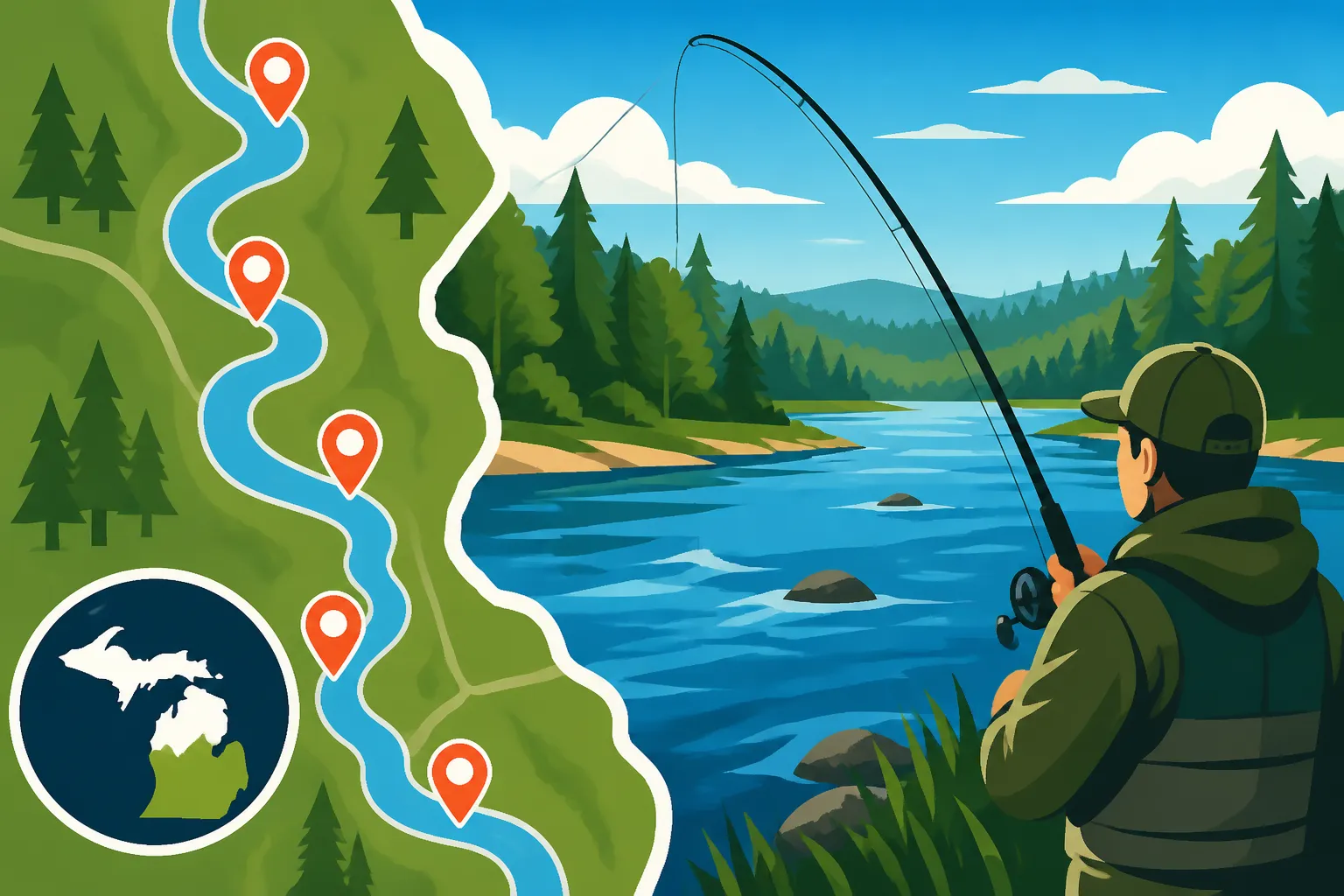
To make planning easier, here's a quick reference table for some of the key access points discussed, along with their primary uses and available amenities.
| Access Point | Primary Use (Wading/Boating) | Key Features / Notes | Amenities (Parking, Restrooms, Ramp) | GPS Coordinates (Approximate) |
|---|---|---|---|---|
| Upper River | ||||
| Green Cottage | Wading, Small Canoe/Kayak | Secluded, good for resident trout | Limited Parking | 43.911, -85.864 |
| Claybanks | Wading, Small Canoe/Kayak | Slower pools, deeper bends, can be muddy banks | Limited Parking | 43.903, -85.890 |
| M-37 Bridge | Wading, Small Canoe/Kayak | Popular, transition zone, often crowded | Roadside Parking | 43.886, -85.908 |
| Middle River | ||||
| Gleason's Landing | Drift Boats, Wading | Premier access, very popular for runs, gravel runs | Ample Parking, Restrooms, Boat Ramp | 43.869, -85.962 |
| Sulak Access | Drift Boats, Wading | Good alternative to Gleason's, less crowded | Decent Parking, Boat Ramp | 43.846, -86.007 |
| Walhalla Access | Drift Boats, Wading | Lower end of middle river, wider sections | Good Parking, Boat Ramp | 43.834, -86.062 |
| Lower River | ||||
| Indian Bridge | Wading, Small Boat | Simpler access, more open sections | Limited Parking | 43.821, -86.104 |
| Custer Access | Wading, Small Boat | Convenient, close to town, good resident fish | Decent Parking | 43.824, -86.168 |
| Ludington (River Mouth) | Shore/Pier, Boat Launch | Great Lakes influence, pier fishing, charter services | Ample Parking, Docks, Boat Ramps | 43.957, -86.444 |
Note: GPS coordinates are approximate and meant for general guidance. Always refer to official maps or a reliable GPS device for precise navigation.
Essential Gear and Safety for Pere Marquette Anglers
Being prepared with the right gear and a focus on safety can significantly enhance your Pere Marquette fishing experience. The river, while beautiful, demands respect, especially with its changing flows and temperatures.
Recommended Gear for River Access
Whether you're wading or drifting, having appropriate gear is crucial for comfort and effectiveness.
- Waders and Boots: For wading anglers, breathable chest waders are essential. Combine them with sturdy wading boots that have good ankle support and felt or rubber soles (often with studs) for traction on slippery rocks and river bottoms. The Pere Marquette's bottom can be quite uneven and slick in places.
- Layered Clothing: Michigan weather can be notoriously fickle. Dress in layers, even on seemingly warm days. Quick-drying synthetics are always a good choice under your waders.
- Life Vest (PFD): If you're in a boat, a U.S. Coast Guard-approved life vest is not just recommended, it's often legally required. Even waders should consider wearing one, especially in deeper or faster currents. The Pere Marquette can have strong currents, particularly during high water periods.
- Rod and Reel: Your choice will depend on your target species and technique. For steelhead and salmon, a medium-heavy spinning rod (8'6" to 10'6") or a moderate-fast action fly rod (8-10 wt) is common. For trout, lighter setups are preferred. Explore options like the Best Rod Length for River Steelhead or Best Rod for Steelhead Fishing for more specific recommendations.
- Tackle Box/Vest: Carry essential terminal tackle, including various weights, hooks, leaders, and your preferred baits or lures. Always be prepared for snags, so bring extra.
- Net: A good landing net with a long handle is indispensable, especially for large salmon and steelhead. Make sure it's fish-friendly, with rubberized mesh to protect scales and slime.
- Water and Snacks: Stay hydrated and keep your energy up. A thermos with a warm drink can be a real comfort on chilly mornings.
- First-Aid Kit: Even minor cuts or scrapes can be a problem in the wilderness. A small, waterproof kit is a wise addition to any fishing pack.
Staying Safe on the Water
Safety should always be your top priority when enjoying the Pere Marquette.
- Check Weather and Water Conditions: Before heading out, always check the local weather forecast and river conditions. Sudden storms or changes in water levels can make a safe day turn dangerous quickly. Be aware of how Water Temperature Affects Steelhead Runs and plan accordingly.
- Communicate Your Plans: Let someone know where you're going and when you expect to return, especially if you're fishing alone.
- Wading Poles: A wading pole can provide crucial stability when navigating uneven or swift currents.
- Know Your Limits: Don't attempt to wade through water that's too deep or too fast for your skill level. If in doubt, find another spot or stick to shore.
- Sun Protection: Even on cloudy days, UV rays can be intense. Wear sunscreen, a wide-brimmed hat, and polarized sunglasses to protect your eyes and improve visibility into the water.
- Emergency Preparedness: Carry a whistle, a fully charged cell phone (in a waterproof case), and know basic first aid. In remote areas, reception might be spotty, so don't rely solely on your phone.
The Pere Marquette River truly is a gem of Michigan, offering incredible fishing and natural beauty. By understanding its unique sections, knowing the best access points, and adhering to proper etiquette and safety measures, you're set for an unforgettable angling adventure.
Disclaimer
The information provided in this guide is for general informational purposes only and is not intended as legal advice or an exhaustive list of all regulations. Fishing regulations, access points, and river conditions can change. Always consult the latest Michigan DNR fishing guide, check local conditions, and respect private property signs before heading out. Fishing involves inherent risks, and anglers should always prioritize their safety and well-being.