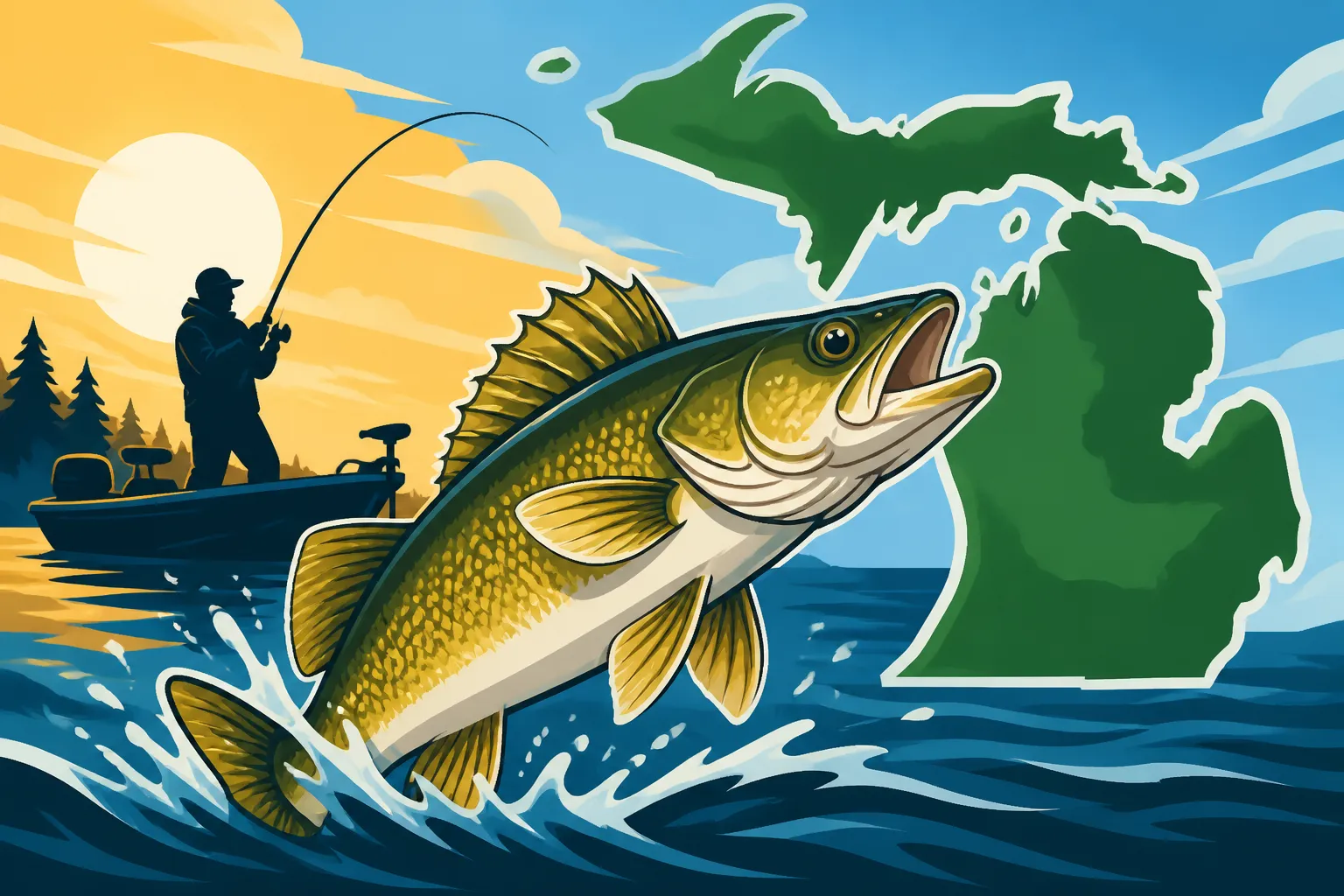
Michigan’s Best Walleye Waters
If you've ever spent hours on the water, meticulously casting, trolling, or jigging, only to come home empty-handed while hearing tales of monster walleye being pulled from "somewhere" in Michigan, you know the frustration. Finding those elusive fish in a state as vast and diverse as Michigan can feel like searching for a needle in a haystack. But don't despair! This comprehensive guide is designed to cut through the guesswork, revealing Michigan's absolute best walleye waters and equipping you with the knowledge to consistently find and catch these highly prized fish.
The Enduring Allure of Michigan Walleye Fishing
There's a reason walleye hold such a special place in the hearts of Michigan anglers. It's not just their delectable flavor, which is truly second to none; it's the challenge they present, their often subtle bite, and the reward of outsmarting a truly magnificent predator. Michigan, with its sprawling Great Lakes coastline and thousands of inland lakes and rivers, offers an incredibly diverse fishery for this sought-after species. From the vast, open waters of Lake Erie to the quiet corners of an Upper Peninsula lake, the opportunities are endless, but knowing where to focus your efforts is key.
Why Walleye Captivate Michigan Anglers
Walleye are more than just a good meal; they represent a pinnacle of freshwater sportfishing for many. Their elusive nature demands skill, patience, and a keen understanding of their habits, making every successful catch feel like a well-earned victory. For many, it's the thrill of the chase, the anticipation as you watch your line, and the powerful fight once hooked that makes them so captivating. Plus, who can resist the idea of bringing home a cooler full of fresh walleye fillets for a family fish fry? It’s a tradition deeply woven into Michigan’s outdoor culture.
Beyond the dinner plate, walleye fishing offers a chance to connect with Michigan's stunning natural landscapes. Whether you're drifting across a tranquil inland lake at dawn or battling choppy waves on one of the Great Lakes, the pursuit of walleye places you right in the heart of our state's wild beauty. It’s a chance to unwind, de-stress, and immerse yourself in the natural rhythm of the water. This combination of challenge, reward, and natural beauty solidifies the walleye's status as a true gem of Michigan angling.
Ecological Factors Supporting Michigan's Robust Walleye Populations
Michigan's unique geography plays a crucial role in fostering such robust walleye populations. We're blessed with vast freshwater resources, from the deep, nutrient-rich Great Lakes to thousands of diverse inland lakes and an intricate network of rivers. This incredible habitat diversity provides ample spawning grounds, abundant forage, and protective cover for walleye at every stage of their life cycle. Cold, clear waters and plenty of schooling baitfish like alewives, smelt, and yellow perch contribute significantly to the health and size of Michigan's walleye.
Furthermore, the Michigan Department of Natural Resources (DNR) has long maintained proactive fisheries management programs, including careful stocking initiatives, habitat restoration projects, and science-based regulations. These efforts ensure that walleye populations remain healthy and sustainable for future generations of anglers. When you combine natural advantages with dedicated conservation, you get a recipe for some of the best walleye fishing in North America, a true testament to Michigan's commitment to its aquatic resources.
Walleye Fishing on the Great Lakes: The Giants Await
The Great Lakes offer some of Michigan's most incredible — and often most challenging — walleye fishing opportunities. These vast inland seas hold truly impressive numbers of walleye, including trophy-sized specimens that will test your gear and your grit. While these waters demand larger boats and a keen eye on the weather, the rewards can be legendary. We're talking about fisheries that consistently produce limits of big, healthy fish.
Saginaw Bay: A Walleye Paradise on Lake Huron
When you talk about walleye in Michigan, Saginaw Bay immediately comes to mind. This enormous, shallow bay of Lake Huron is widely considered one of the best walleye fisheries in the entire country, and for good reason. Its relatively shallow, nutrient-rich waters warm quickly in the spring, promoting rapid growth for walleye and an explosion of forage. This unique ecosystem makes it a walleye factory, producing incredible numbers of fish year after year.
Anglers flock to Saginaw Bay from early spring through fall, targeting walleye that range from abundant eaters to true wall-hangers. The fishing here is incredibly versatile; you can catch them trolling crankbaits or crawler harnesses, jigging blade baits, or even casting plastics. With numerous boat launches and charter services, accessing this walleye haven is relatively easy, making it a prime destination for both seasoned veterans and those looking to experience world-class walleye fishing. If you're serious about catching walleye in Michigan, Saginaw Bay is an absolute must-visit. For those unfamiliar with the area, checking out options on FishingBooker can help you find experienced local guides.
Lake Erie's Western Basin: Trophy Walleye Opportunities
Though only a small portion of Lake Erie falls within Michigan's borders, the state benefits immensely from the lake's world-renowned walleye fishery, particularly in its western basin. The waters of Lake Erie are often hailed as the "Walleye Capital of the World," and Michigan anglers certainly get to partake in that glory. This part of the lake is exceptionally fertile, supporting massive populations of walleye that can grow to truly enormous sizes thanks to an abundant food supply.
The Michigan waters of Lake Erie, especially near Luna Pier and Sterling State Park, offer fantastic opportunities for trophy walleye. Anglers typically target these fish by trolling deep-diving crankbaits or worm harnesses, often using planer boards to cover wide swaths of water. While weather can be a factor, calm days offer an incredible chance to hook into some of the biggest walleye Michigan has to offer. It’s not uncommon to hear tales of multiple 10-pounders caught in a single outing here, making it a bucket-list destination for many. You can read more about the general rules for these impressive fish in our guide to Michigan Walleye Size and Possession Limits.
Other Great Lakes Walleye Hotspots
While Saginaw Bay and Lake Erie often steal the spotlight, other parts of the Great Lakes system also provide excellent walleye fishing, though perhaps on a slightly different scale. Lake Michigan, particularly its deeper southern sections and numerous bays like Grand Traverse Bay and Little Traverse Bay, holds strong walleye populations. Anglers often find success targeting them in transition areas, near river mouths, or over deep structure, especially during low light conditions or at night. The waters surrounding Manistee and Ludington can be particularly fruitful.
Lake Huron, beyond Saginaw Bay, offers productive walleye fishing too, especially in the northern areas like Thunder Bay near Alpena. These deeper, clearer waters require different tactics, often focusing on structure and depth. Even Lake Superior, while primarily known for its trout and salmon, has localized walleye populations in certain bays and river mouths, especially in the western Upper Peninsula. These fisheries might not boast the sheer numbers of Saginaw Bay, but they offer incredible solitude and the chance to hook into some truly wild, hard-fighting walleye.
Premier Inland Lakes for Walleye
Beyond the colossal Great Lakes, Michigan is dotted with thousands of inland lakes, many of which are fantastic walleye producers. These lakes offer a more accessible, often less intimidating, experience than their larger counterparts, perfect for those with smaller boats or who prefer a more tranquil day on the water.
Houghton Lake: Michigan's Largest Inland Walleye Fishery
Houghton Lake, located in the heart of Michigan's Lower Peninsula, holds the esteemed title of Michigan's largest inland lake, and it lives up to its reputation as a premier walleye fishery. This sprawling, relatively shallow lake (with an average depth of about 7.5 feet) covers over 20,000 acres, offering vast expanses of prime walleye habitat. Its sandy and mucky bottom, interspersed with weed beds, provides excellent cover and abundant forage for a thriving walleye population.
The consistent stocking efforts by the DNR, combined with natural reproduction, ensure a healthy supply of walleye year after year. Houghton Lake is particularly famous for its incredible ice fishing scene in winter, drawing thousands of anglers who brave the cold for a shot at its prolific walleye. During the open water seasons, trolling with crankbaits or crawler harnesses is a popular and effective method. If you're looking for a reliably good walleye bite on an expansive inland lake, Houghton Lake is definitely a destination you should explore. Our dedicated guide, Houghton Lake Fishing Guide: Michigan's Largest Inland Lake, dives even deeper into this fantastic spot.
Northern Michigan's Deep-Water Walleye Lakes
While Houghton Lake offers vast shallow waters, Northern Michigan is also home to several deep, clear inland lakes that produce fantastic walleye fishing. Lakes like Higgins Lake, Torch Lake, Burt Lake, and Mullett Lake are known for their pristine beauty and cold, oxygen-rich waters that support diverse fish populations, including some truly impressive walleye. These lakes often require different tactics due to their depth and clarity, but the rewards are well worth the effort.
On these deeper lakes, walleye tend to suspend over open water or relate closely to sharp drop-offs, humps, and submerged points. Trolling with downriggers or lead core line is a common strategy to present baits at the precise depth where walleye are feeding. Jigging spoons or blade baits vertically over structure can also be highly effective. The walleye in these clear-water lakes can be a bit more finicky, often preferring natural colors and subtle presentations, but they are often robust and hard-fighting. Each of these lakes offers a unique fishing experience, from the incredibly clear waters of Torch Lake to the chain of lakes that includes Burt and Mullett.
Smaller Inland Lakes with Strong Walleye Populations
Don't let the focus on large lakes make you overlook the hidden gems among Michigan's smaller inland waters. There are countless smaller lakes throughout the state that, thanks to consistent stocking and good management, hold surprisingly strong walleye populations. These can be fantastic alternatives for anglers seeking less crowded waters or a more intimate fishing experience. Many local lakes you might not have heard of can provide incredible walleye action, often right in your backyard.
To find these smaller walleye hotspots, it's often a matter of local knowledge, checking DNR stocking reports, or doing a bit of scouting. Lakes like Lake Gogebic in the Upper Peninsula, or Black Lake and Hubbard Lake in the Lower Peninsula, are just a few examples of mid-sized lakes that consistently produce good walleye catches. Tactics on these lakes often mirror those on larger inland waters, but with a focus on specific structures like weed lines, points, and sudden depth changes. A little research can uncover a local treasure where you can enjoy fantastic walleye fishing away from the crowds.
River Systems: Hidden Walleye Gems
Michigan's extensive river systems are often overlooked for their walleye potential, but for those in the know, they offer some of the most exciting and predictable walleye fishing, especially during spawning runs. These moving water environments attract large numbers of walleye as they migrate upstream, providing incredible shore and boat angling opportunities.
Detroit and St. Clair Rivers: World-Class Walleye Runs
The Detroit River and the St. Clair River are legendary among walleye anglers, famous for their incredible spring walleye runs. These rivers connect Lake Huron to Lake Erie, acting as crucial migration corridors for immense numbers of walleye moving to and from their spawning grounds. The sheer volume of fish that pass through these waterways each spring is astounding, creating a world-class fishery that attracts anglers from across the globe.
Vertical jigging is the predominant and most effective technique on these fast-moving rivers. Anglers use heavy jigs tipped with soft plastics or minnows to bounce along the bottom, directly presenting their offerings to the concentrated schools of migrating walleye. The bite can be subtle, often just a slight "thump" or added weight on the line, but the fight that follows is undeniable. The Detroit River, in particular, is easily accessible with numerous boat ramps and offers fantastic opportunities for guided trips. While the focus is often on walleye, these rivers also offer great opportunities for other species, as highlighted in our article on Detroit River Perch Fishing Spots.
Lower Peninsula Rivers for Walleye
Beyond the famed Detroit and St. Clair Rivers, several other Lower Peninsula rivers host excellent walleye fishing, particularly during their seasonal runs. The Muskegon River, which flows into Lake Michigan, is a prime example. While often celebrated for its steelhead and salmon runs, the Muskegon also sees significant walleye movement, especially in its lower stretches and around the mouth where it meets Muskegon Lake. Trolling or casting crankbaits, or drift fishing with jigs and live bait, can be very productive here.
Similarly, the Grand River, especially near Grand Rapids and downstream towards Lake Michigan, offers consistent walleye action. Riverbend areas, deeper holes, and bridge pilings are common holding spots. The Tittabawassee River, feeding into Saginaw Bay, is another fantastic river walleye fishery, known for its spring run that contributes significantly to the bay's population. Fishing these rivers requires an understanding of current, structure, and the nuances of river walleye behavior, but they offer some of the most exciting and accessible walleye fishing experiences in the state. Don't forget, you'll need a Michigan Fishing License Guide for Residents and Nonresidents to legally fish these waters.
Upper Peninsula Rivers with Walleye Potential
While the Upper Peninsula is often synonymous with trout, salmon, and smallmouth bass, it also boasts several rivers that offer excellent walleye fishing, particularly in their lower reaches near larger lake systems. The Menominee River, forming part of the border with Wisconsin, is a well-known walleye destination, especially in its lower sections as it approaches Green Bay. Anglers here find success with a variety of techniques, from trolling to jigging.
Other UP rivers, like the Manistique River and the Whitefish River, also support localized walleye populations, often benefiting from the larger lake systems they connect to. Fishing these rivers often requires more scouting and local knowledge, but they can offer incredibly rewarding experiences in beautiful, less-pressured environments. These waters might not yield the sheer numbers of the Detroit River, but the quality of the fish and the pristine wilderness setting make them truly special. Many of these waters are perfect for a quiet day of fishing, and a local guide found on services like FishingBooker can often point you to the best spots.
Understanding Walleye Behavior and Habitat
To consistently catch walleye in Michigan's diverse waters, you need to understand their behavior, preferred habitats, and how environmental factors influence their movements. Walleye are creatures of habit, but those habits can change dramatically with the seasons and water conditions.
Preferred Walleye Habitats: Structure and Cover
Walleye are masters of ambush, and their habitat choices reflect this predatory nature. They are almost always found relating to some form of structure or cover. In lakes, this might include submerged humps, rock piles, weed lines (especially those with a sharp edge), points that extend into deeper water, and drop-offs. These features provide places for them to hide, ambush unsuspecting baitfish, and escape bright sunlight, which they generally dislike.
In rivers, walleye will often hold in current breaks behind boulders, log jams, bridge pilings, or in the deeper seams and holes where the current is reduced. They use these spots to conserve energy while waiting for food to drift by. Understanding the topography of the lake or river bottom is paramount. Using modern electronics like fish finders can be incredibly helpful in locating these subtle yet crucial structural elements. The more you learn to "read" the water and identify these key holding areas, the more successful you'll be.
Forage and Feeding Habits
Walleye are opportunistic predators with a diet that primarily consists of smaller fish. Their preferred forage varies by water body but commonly includes yellow perch, shiners, smelt, alewives, and various minnows. In lakes, they'll often follow schools of baitfish, moving between different depths and structures throughout the day. In rivers, they'll position themselves to intercept baitfish carried by the current.
Their feeding habits are also heavily influenced by light conditions. Walleye have excellent low-light vision, thanks to a reflective layer in their eyes called the tapetum lucidum. This gives them a distinct advantage over their prey during dawn, dusk, and even throughout the night, which are often the prime feeding times. On cloudy days or in stained water, they might feed more actively during daylight hours. Matching the hatch – or using lures that mimic the size, shape, and color of the local baitfish – can significantly increase your success.
Impact of Water Temperature and Clarity
Water temperature and clarity are two critical environmental factors that dictate walleye behavior and location. Walleye are cool-water fish, generally preferring temperatures between 55°F and 70°F (13°C to 21°C). During colder periods (spring and fall), they might be found in shallower, warmer waters. In the heat of summer, they'll retreat to deeper, cooler sections of lakes or rivers. Spawning occurs in early spring when water temperatures typically reach 40°F to 50°F (4°C to 10°C).
Water clarity also plays a significant role. Walleye are more light-sensitive than many other species. In very clear water, they tend to stay deeper or in denser cover during the day, becoming more active feeders during low-light periods. In stained or turbid water, their excellent low-light vision gives them an advantage, and they may feed more readily throughout the day. This understanding of their physiological preferences is key to predicting where they might be and what moods they're in, helping you choose the right presentation.
Seasonal Strategies for Michigan Walleye
Walleye fishing in Michigan is a year-round pursuit, but your tactics need to adapt dramatically with the changing seasons. Each season presents unique challenges and opportunities, requiring different approaches to consistently find and catch these elusive fish. Understanding the walleye's seasonal movements and behaviors is crucial for success.
Spring Spawning Runs and Post-Spawn Bite
Spring is arguably the most anticipated season for walleye anglers, primarily because of the incredible spawning runs that occur in many of Michigan's rivers and shallow lake areas. As ice recedes and water temperatures begin to climb into the 40s (Fahrenheit), walleye migrate upstream into rivers or move into shallow, rocky shoals in lakes to reproduce. This concentration of fish offers some of the best opportunities to catch large numbers of walleye. Our guide, When Does Walleye Season Open in Michigan's Lower Peninsula, offers more details on these crucial dates.
During the spawn, vertical jigging with minnows, soft plastics, or blade baits is incredibly effective in rivers, as fish are often holding tight to the bottom in current breaks. In lakes, casting stickbaits or slowly trolling small crankbaits over spawning flats can produce results. Immediately after the spawn, the fish are often exhausted but quickly become aggressive as they seek to replenish their energy. This post-spawn bite can be fantastic, with walleye willing to chase a wider variety of lures. Focus on areas adjacent to spawning grounds where fish might be recovering and feeding heavily.
Summer Deep-Water and Low-Light Tactics
As Michigan's waters warm through late spring and into summer, walleye generally move deeper in lakes to find cooler, more comfortable temperatures and to follow their primary forage. In the Great Lakes and larger inland lakes, this often means targeting depths of 20 to 40 feet or more during the day. Trolling becomes a highly effective method, allowing anglers to cover vast areas and present baits at precise depths. Downriggers, lead core line, and diving crankbaits are essential tools for summer trolling.
In addition to deep-water tactics, summer also offers incredible low-light and night fishing opportunities. Walleye's superior vision in dim conditions means they often move into shallower water to feed during dawn, dusk, and throughout the night. Casting stickbaits or working jig-and-minnow combinations along weed lines, points, and shallow flats can be incredibly productive after the sun goes down. This is when some of the biggest walleye are caught, venturing out from their daytime retreats.
Fall Feeding Frenzy and Preparation for Winter
Fall is another fantastic season for Michigan walleye fishing, often overlooked by anglers who shift their focus to salmon and steelhead. As water temperatures begin to drop, walleye sense the approaching winter and embark on a massive feeding frenzy to build up fat reserves. This period can offer some of the most aggressive bites of the year, with walleye actively chasing down baits. They often return to shallower depths, making them more accessible than during the peak of summer.
Look for walleye congregating on main lake points, sharp break lines, and along the edges of remaining green weed beds. Trolling crankbaits, jigging spoons, or casting blade baits and larger soft plastics can be highly effective. The fall bite can last well into late autumn, right up until ice forms on the lakes and rivers. This season offers a great blend of comfortable weather and active fish, making it a prime time to hit your favorite walleye spots before the hardwater season begins.
Winter Ice Fishing for Walleye
Michigan's long winters don't stop dedicated walleye anglers; in fact, they usher in a whole new set of opportunities through the ice. Ice fishing for walleye is a beloved tradition across the state, with lakes like Houghton Lake and Saginaw Bay becoming small, temporary cities of shanties. Walleye remain active under the ice, often following similar depth contours and structures as in the open water season. Our comprehensive Michigan Ice Fishing Guide provides detailed information on getting started.
Jigging with spoons, lipless crankbaits, or various soft plastics tipped with minnow heads is a popular and effective method. Deadsticking a live minnow under a tip-up or a sensitive bobber is also a deadly technique, often accounting for the biggest fish. Portable fish finders (flasers or sonar units) are invaluable for locating structure, seeing your bait, and detecting subtle walleye bites. Safety on the ice is paramount, but for those prepared, winter offers a unique and often highly productive way to target Michigan's walleye, especially during the early and late ice periods.
Essential Gear and Techniques for Michigan Walleye
Successful walleye fishing in Michigan requires not just knowing where to go, but also having the right tools and techniques in your angling arsenal. The gear you choose and the methods you employ can make all the difference between a frustrating day and a memorable catch.
Rods, Reels, and Line for Walleye
When it comes to rods and reels for walleye, versatility is key. A good medium-light to medium-power spinning rod, typically 6'6" to 7'6" in length, with a fast action tip, is ideal for most walleye applications. This setup provides the sensitivity needed to detect those often subtle walleye bites, yet enough backbone to handle a fighting fish. Paired with a smooth spinning reel in the 2500-3000 size range, you'll have a balanced setup capable of casting light jigs or trolling medium-sized crankbaits. For heavier trolling on the Great Lakes, a specialized trolling rod with a softer tip and more backbone, often 7 to 9 feet, paired with a line counter baitcasting reel, is preferred.
Line selection is also crucial. For most jigging and casting, a 6-10 lb braided line with a fluorocarbon leader (6-12 lb test) offers excellent sensitivity, minimal stretch, and good abrasion resistance. The fluorocarbon leader becomes virtually invisible underwater, which is a huge advantage in clear water. For trolling, especially with planer boards, a monofilament line in 10-14 lb test is often favored for its stretch and buoyancy, while lead core line is used to achieve greater depths without additional weights. Knowing your line types and when to use them is a significant step in mastering walleye fishing.
Top Lures and Baits for Michigan Walleye
Michigan walleye respond to a wide array of lures and live baits, but certain choices consistently outperform others. Crankbaits are indispensable, particularly for trolling in open water or along contours. Popular models like Rapala Shad Raps, Berkley Flicker Shads, or custom painted Reef Runners effectively mimic baitfish and come in various diving depths. Colors should often match local forage, but don't shy away from bright "attractor" colors in stained water.
For jigging, bucktail jigs, soft plastic paddle tails or twister tails on lead heads (1/8 oz to 1 oz, depending on depth and current), and blade baits like the Heddon Sonar or Rapala Rippin' Rap are deadly. Tipping jigs with a live minnow or a minnow head often increases their effectiveness, especially in colder water. Live bait, such as shiner minnows, fathead minnows, or nightcrawlers (often on a crawler harness), is always a top choice for walleye, either still fished, drifted, or trolled. For more specifics, check out our guide on Best Lures for Michigan Walleye.
Popular Walleye Fishing Techniques
The techniques used to catch walleye in Michigan are as varied as the waters themselves.
Trolling is a highly effective method, especially on large lakes and open water areas like Saginaw Bay and Lake Erie. This involves slowly moving the boat while dragging multiple lures at different depths, often using planer boards to spread out lines and cover a wider area. It’s a fantastic way to locate scattered fish and can be incredibly productive once a pattern is established.
Jigging is king in river systems like the Detroit River, but also deadly on lake structure. This technique involves vertically presenting a jig directly below the boat, often bouncing it off the bottom or working it through schools of suspended fish. The subtle rod tip movements required to impart action to the jig while feeling for a light bite make it an engaging and rewarding technique.
Casting is effective in shallower water, along weed lines, or during low-light conditions. Anglers cast crankbaits, jigs, or spinnerbaits to promising structure and retrieve them, mimicking fleeing baitfish. Finally, drift fishing with live bait rigs, often a simple slip-sinker rig with a minnow or crawler, is a fantastic way to cover water on wind-blown flats or current-swept breaks in lakes and rivers, letting the boat's drift or the current present the bait naturally. Many charter captains listed on FishingBooker specialize in these techniques and can provide invaluable insights.
Regulations and Conservation: Protecting Our Walleye
Michigan is committed to maintaining healthy walleye populations, and as anglers, we play a crucial role in that effort. Understanding and adhering to fishing regulations, practicing responsible angling, and supporting conservation initiatives are all vital to ensuring the future of walleye fishing in our state.
Understanding Michigan Walleye Size and Bag Limits
One of the most important aspects of responsible walleye fishing in Michigan is knowing and following the regulations regarding size and bag limits. These rules are put in place by the Michigan DNR to protect walleye populations, ensure sustainable harvesting, and allow fish to reach spawning maturity. Regulations can vary significantly depending on the specific body of water, so it's absolutely critical to consult the most current Michigan Fishing Guide (available online or from license retailers) before you head out.
Typically, there's a minimum size limit for walleye, often around 15 inches, though some lakes might have protected slot limits (e.g., you can't keep fish between 18 and 23 inches) or different size requirements altogether. The daily possession limit, which dictates how many walleye you can keep per day, is also crucial. For example, the statewide daily limit is often 5 walleye, but again, this can change. Always double-check! Failing to adhere to these rules can result in significant fines and penalties, and more importantly, it can harm the very resource we cherish. You can find comprehensive details in our Michigan Fishing Regulations Every Angler Should Know guide.
The Importance of Responsible Angling and Catch-and-Release
Beyond simply following the rules, practicing responsible angling ethics is paramount. This includes proper fish handling, especially for those fish you intend to release. If you're planning on catch-and-release, use single, barbless hooks when possible, minimize the time the fish is out of the water, and handle it gently with wet hands to protect its slime coat. For larger walleye, particularly those in warmer water, consider "reviving" them by holding them upright in the water until they can swim away strongly.
Responsible angling also extends to respecting other anglers, practicing good sportsmanship, and leaving no trace on the water or shore. Clean up any litter, properly dispose of fishing line, and be mindful of noise levels, especially in popular fishing areas. These simple acts contribute to a positive experience for everyone and help maintain the health of our natural environments. Our future fishing opportunities depend on everyone doing their part to be good stewards of the resource.
Conservation Efforts and Future of Walleye Fishing
The health of Michigan's walleye fisheries is a direct result of ongoing conservation efforts by the DNR, various angler groups, and dedicated volunteers. These efforts include habitat restoration, monitoring fish populations through surveys, controlling invasive species, and extensive stocking programs. Funds generated from the sale of How to Buy a Michigan Fishing License and excise taxes on fishing equipment directly contribute to these vital programs.
As anglers, we can actively participate in conservation by purchasing our licenses, reporting any observed violations, participating in angler surveys, and joining local conservation groups. Many organizations work tirelessly to protect and enhance walleye habitat, ensuring that these incredible fish continue to thrive in Michigan's waters for generations to come. By staying informed and involved, we help secure a vibrant future for Michigan walleye fishing, preserving not just a species, but a cherished way of life.
| Walleye Waterway | Primary Location | Best Season | Typical Depth | Key Techniques | Notable Features |
|---|---|---|---|---|---|
| Saginaw Bay | Lake Huron (East) | Spring, Fall, Winter | Shallow (5-20 ft) | Trolling, Jigging | High numbers, diverse methods |
| Lake Erie (MI) | Lake Erie (SE) | Spring, Summer | Varied (10-40+ ft) | Trolling (crankbaits) | Trophy potential, large fish |
| Houghton Lake | Central LP | All Year (Ice) | Shallow (5-15 ft) | Trolling, Jigging, Tip-ups | Largest inland lake, great ice fishing |
| Detroit River | SE Michigan | Spring | Deep (20-40 ft) | Vertical Jigging | World-class spawning run, high current |
| Muskegon River | West LP | Spring, Fall | Varied (river channels) | Trolling, Jigging, Drift fishing | Excellent river run, less crowded |
| Torch Lake | Northern LP | Summer | Deep (20-60+ ft) | Trolling (downriggers) | Clear water, quality fish |
Disclaimer
Please remember that fishing conditions, regulations, and fish behavior can change rapidly. Always consult the most current Michigan Department of Natural Resources (DNR) fishing guide before heading out on the water. This information is for general guidance and educational purposes only.